RUN IT BACK
Made with generative AI music: MiniMax-Music3 references: Krea 2 turbovideo: MiniMax H3 hybrid, 12 stepsLoRA: fl2v turbo 8-stepLoRA: h3-realism-peopleLoRA: H3-GalaxyAceupscale: H3 Latent Upscaler 3D ×2
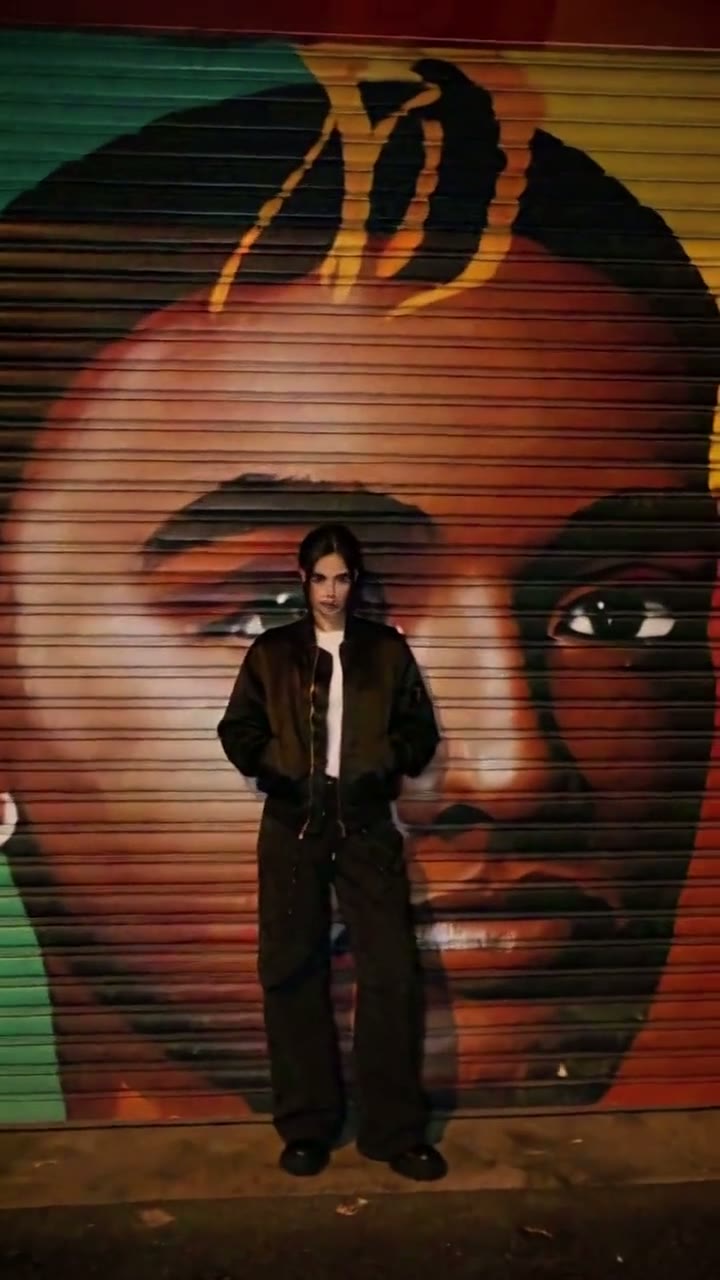
RUN IT BACK is a vertical music video for a jungle track, the fast, heavy end of drum and bass. An MC raps in Jamaican patois over chopped breakbeats and a distorted bass, and the track ends on “run it back”. On screen, a woman in a black satin bomber jacket runs through nine graffiti-covered spots at night, in grainy 16mm with hard cuts.
How it was made
The video took one day with the Claude Code agent; every model ran on my own machine, in ComfyUI on an RTX 5080. The song is my own, made with MiniMax Music 3, an AI model that generates music with vocals.
- The agent wrote the lyrics and style description. Early takes were too slow and melodic, so I asked for at least twice as much text, in patois, and a harder sound. I found the setting that gave it bite myself and generated the take used in the film.
- The woman in the bomber jacket was my idea; the agent generated her in Krea 2 as a portrait and character sheet, used only for her face and outfit.
- The shots come from MiniMax H3, which generates video and sound together. The song went in as a latent, the compressed form the model works in, so movement and lips follow the music; the soundtrack is the original song. At my request every clip has its own length: the agent measured the song’s energy and timed nine clips of 13.7 to 17.9 seconds to start where the music shifts, then cut them into 28 shots.
- I raised the steps, the passes in which the model pulls the image out of noise, from 4 to 12 and asked for LoRAs, small add-ons that fine-tune the model. The agent chose the hybrid model (a merge of two H3 versions) and the LoRAs. A clip took about 7 minutes, the whole film about an hour.
What it shows
- Fast motion needs steps. At 4, the leap up the stairs and distant shots blurred; 12 made a clear difference. The agent read the smoother skin as plastic. I corrected it: with the LoRAs the picture was clearly more realistic. The smoothness simply meant less noise.
- A distant face is a pixel problem. At 544 pixels wide, a background face gets a dozen or so pixels, and no steps, LoRA or upscaling (raising resolution afterwards) brings it back. Wide shots show the place; faces need closer ones.
- A setup worth repeating. One clip per location with cuts inside, references for appearance only, the song in the latent. Those settings later got the stalled WIRE ME UP finished.